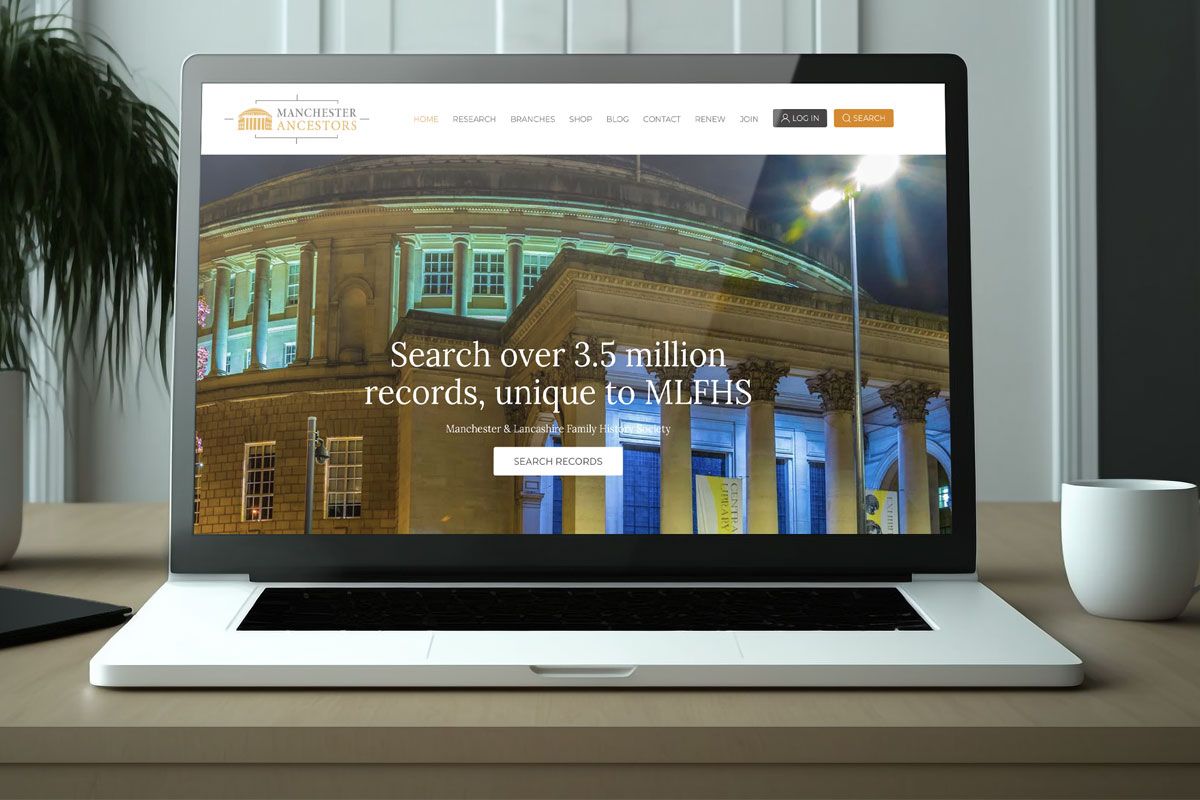
Solution provided
We designed and delivered a fully bespoke membership web application, built around a robust and flexible database architecture capable of managing over 3 million records.
The platform introduced a structured membership model, enabling users to join online, manage their subscriptions and access tailored content based on their local branch. We migrated legacy data into a centralised system and replaced manual processes with a streamlined digital workflow.
A key focus was simplicity. Despite the underlying complexity, the interface was designed to be intuitive for both members and administrators, ensuring easy navigation, efficient content management and secure access to sensitive records.
Alongside the platform build, we delivered a full rebrand—including a new name, identity and visual language—positioning the organisation for the next phase of its growth.
Outcomes & Benefits
Members can now access a rich digital archive of genealogical data, including birth, death and marriage records, census data, parish records and historical publications, all through a single, unified platform.
The introduction of online membership registration and payments has significantly improved operational efficiency, while reducing administrative overhead. A centralised dashboard enables users to manage their profiles and subscriptions with ease, enhancing overall engagement and satisfaction.
Internally, the Society now benefits from a cohesive management system that supports events, content distribution and member communications—replacing previously disjointed processes with a streamlined digital infrastructure.
Strategic impact
This project fundamentally repositioned Manchester Ancestors from a traditional, offline-led organisation into a modern, digitally enabled membership community.
By unlocking access to millions of records and creating a collaborative online environment, the platform has strengthened member engagement, extended the Society’s reach and increased the long-term value of its data assets.
The combination of scalable architecture, improved usability and strong governance around data protection ensures the organisation is well-equipped to grow, adapt and continue serving future generations of researchers and members.